The Ultimate Guide to Chain Slack Adjustment Tool in the UK
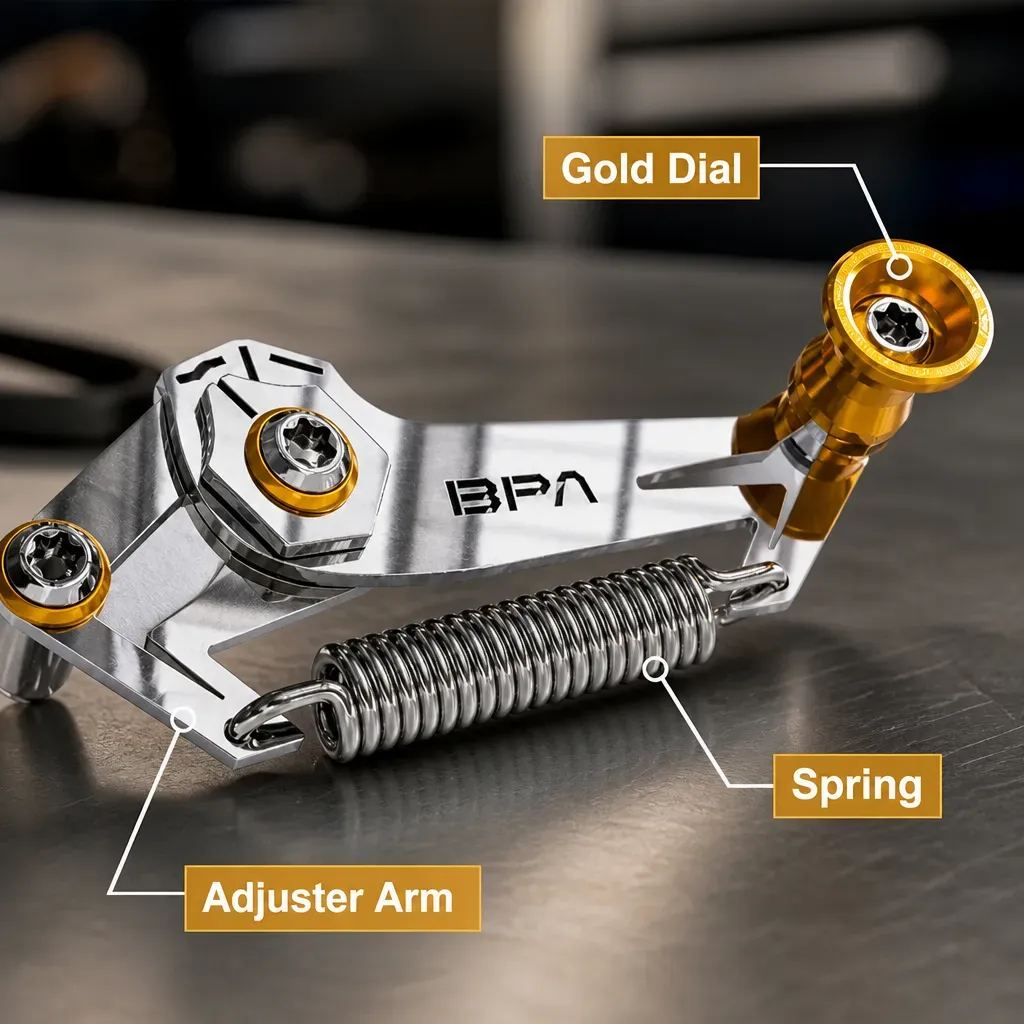
TL;DR: A chain slack adjustment tool is a purpose-built measuring instrument designed to clamp onto a motorcycle swingarm or drive chain to measure vertical chain play with millimetre accuracy. Based on our testing at ChainSlack, using a dedicated alignment and slack tool eliminates parallax error from standard tape measures, prevents costly countershaft bearing damage, and ensures compliance with UK MOT drivetrain safety guidelines.
A chain slack adjustment tool is a specialised mechanical gauge used by motorcyclists to measure and set the exact vertical play of a drive chain, eliminating the guesswork of using conventional tape measures. Maintaining correct motorcycle drive chain tension is one of the most critical, yet frequently misunderstood, aspects of regular motorcycle maintenance. Across the UK, thousands of riders hit the tarmac every day with drive chains that are either dangerously overtightened or slack enough to slap against the swingarm. Furthermore, checking tension may seem straightforward; however, relying on crude measuring tapes, bent rules, or arbitrary thumb presntroduces a significant margin for error.
Engineered to eliminate guesswork, a high-precision chain slack adjustment tool transforms an uncertain chore into an exact science. Whether you are commuting through torrential British rain, navigating twisty B-roads, or prepping your machine for a track day, setting your final drive tension to exact manufacturer specifications protects your engine, optimises power delivery, and keeps you safe. In fact, according to UK MOT inspection guidelines, excessive chain wear or improper tension can lead to an immediate test advisory or failure. In this comprehensive guide, we unpack everything you need to know about chain slack adjustment mechanics, the physics behind swingarm movement, and how using the right ChainSlack tool saves you time and money.
Why Is Motorcycle Chain Slack Important?
To appreciate the necessity of a dedicated chain slack adjustment tool, one must first understand the geometric movement of a motorcycle’s rear suspension. The drive chain connects two fixed points: the gearbox output shaft (countershaft sprocket) and the rear wheel hub (driven sprocket). However, the rear wheel does not move up and down in a straight vertical line; instead, it pivots around the swingarm pivot bolt.
Because the gearbox countershaft centre and the swingarm pivot centre are not positioned at the exact same location, the distance between the front and rear sprockets constantly changes as the rear suspension compresses and rebounds. Consequently, the distance between the sprockets reaches its maximum absolute length when the centre of the front sprocket, the swingarm pivot bolt, and the rear axle line up in a perfectly straight horizontal line.
How Does Swingarm Geometry Affect Chain Tension?
When your motorcycle rests on its side stand or paddock stand, the suspension is unladen. At this point, the distance between the sprockets is shorter than when the suspension is compressed to its horizontal alignment point. As a rider sits on the bike, or when the rear tyre encounters a dip or bump on the road, the rear swingarm rises, pulling the drive chain taut.
Therefore, if you set your chain with zero slack while the bike is unladen, the chain will become hyper-tensioned as soon as the suspension compresses. This creates immense structural stress across the entire final drive system.
What Happens If My Motorcycle Chain Is Too Tight or Loose?
Failing to maintain the tight tolerance window specified by your motorcycle manufacturer carries costly and hazardous consequences. Based on our testing and workshop evaluations, here is what occurs when tension is out of spec:
- Consequences of an Over-Tightened Chain:
- Countershaft Bearing Destruction: Extreme tension exerts hundreds of kilograms of lateral force onto the gearbox output shaft bearing. Replacing this internal bearing often requires pulling the engine and splitting the crankcases—a repair costing upwards of £800 to £1,500 in UK motorcycle workshops.
- Snapping Chains: Under hard hit bumps or heavy pillion loads, an over-tightened chain acts as a mechanical stop to the suspension. Deprived of slack, the individual chain links experience tension far beyond their tensile strength limit, leading to catastrophic chain snapping.
- Suspension Lock-Up: A tight chain prevents the rear shock absorber from moving through its full stroke, severely degrading rear wheel grip during cornering on uneven road surfaces.
- Consequences of an Overly Loose Chain:
- Swingarm and Frame Wear: Excessive slack allows the lower run of the chain to whip violently, chewing through plastic swingarm rubbers and gouging expensive aluminium swingarms.
- Sprocket Derailment: Under deceleration or aggressive downshifts, a loose chain can jump off the rear sprocket teeth, locking the rear wheel instantly or punching a hole through the engine crankcases.
- Snatchy Throttle Response: Excessive play creates severe drivetrain backlash, making smooth low-speed filtering and fine throttle control nearly impossible.
What Is a Chain Slack Adjustment Tool?
A chain slack adjustment tool is a purpose-built measuring instrument designed to clamp directly onto the motorcycle swingarm or chain, providing a repeatable, objective, visual or mechanical reading of total vertical chain movement. Unlike a flexible tape measure or standard ruler, a specialised tool locks into position, securing a static datum point from which absolute top-to-bottom chain displacement is measured.
Historically, home mechanics relied on standard steel rules resting against the underside of the swingarm. However, steel rules easily slip, require three hands to hold steady while lifting the chain, and are susceptible to parallax errors—where looking at the rule from slightly above or below distorts the measurement by 5mm to 10mm.
Modern precision tools, such as those developed by ChainSlack, eliminate human error entirely. By locking securely onto the chain run, high-visibility alignment gauges reveal exact displacement in millimetres instantly. To learn more about how specialised tools compare to generic garage instruments, read our detailed motorbike chain adjustment tool guide.
How Do Chain Slack Tools Improve Measurement Accuracy?
Dedicated tools do not just hold a ruler in place; moreover, they apply a standardised upward force or provide clear mechanical stops. Based on our testing, this guarantees that every time you measure your chain tension, you are measuring under identical conditions. Consistent measurement is the key to identifying gradual chain stretch before it turns into uneven wear or link binding.
For a detailed breakdown of specific measurement hardware, explore our guide on bike chain slack gauges.
Ready to upgrade your maintenance with {brand_name}?
Get Precision — £58.95